The Enduring Appeal of Hashi Bridge Puzzles and How to Leverage Them for KDP Publishing
If you enjoy logic puzzles that reward careful reasoning and a steady hand, Hashi Bridge puzzles offer a uniquely satisfying challenge. Often called Hashiwokakuro or simply Bridges, these puzzles ask you to connect islands on a grid using a series of bridges, following strict rules about the number of connections each island can have. The result is a network of lines that must never cross, never branch, and always form a single connected group. It is a puzzle type that combines spatial reasoning with arithmetic logic, making it a favorite among puzzle enthusiasts who crave something beyond standard sudoku or crosswords.
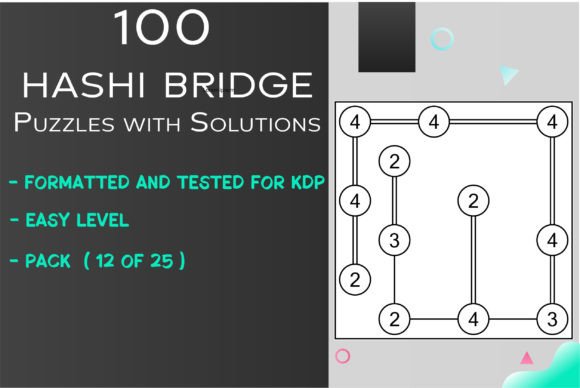
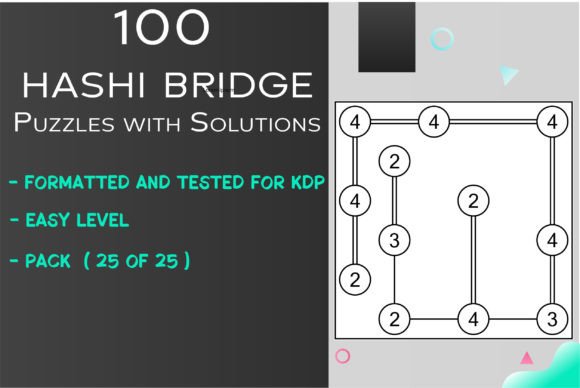
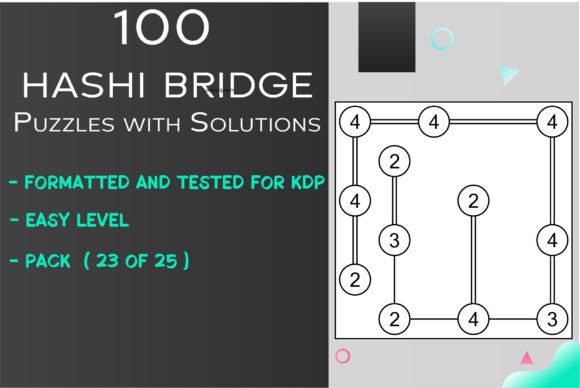
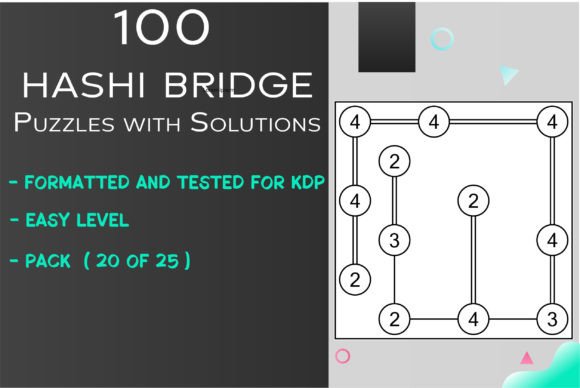
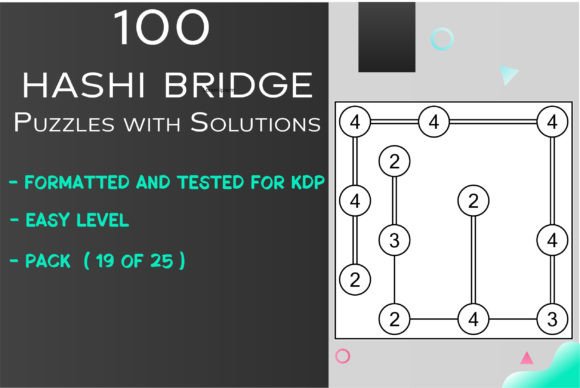
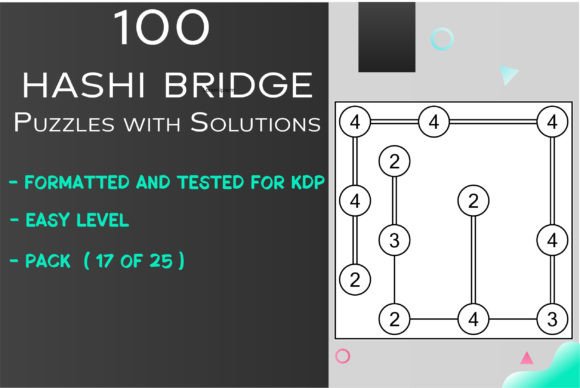
For anyone exploring puzzle creation—especially those working within the KDP (Kindle Direct Publishing) ecosystem—a well-curated collection of Hashi puzzles can be a compelling product. This article explores what makes Hashi puzzles so engaging, how they fit into modern puzzle book markets, and why a collection like 100 Easy HASHI Bridge Puzzles 17 of 25 represents a sweet spot for both solvers and publishers.
Understanding Hashi Bridge Puzzles: Rules and Reasoning
At its core, a Hashi puzzle presents you with a grid containing numbered circles, each representing an island. The number inside each circle tells you exactly how many bridges must connect that island to its neighbors. Bridges can only be drawn horizontally or vertically, and you can place either one or two bridges between any pair of adjacent islands. However, two islands can have at most two bridges connecting them, and bridges cannot cross each other. Finally, all islands must be connected into a single continuous network—no isolated clusters allowed.
This set of constraints creates a rich logical puzzle. Beginners often start by identifying obvious moves: an island with a number equal to the number of possible connections (usually at the edge of the grid) gives you a forced placement. As you progress, you learn to use higher-order deductions involving connectivity and path counting. A puzzle rated at an easy level, like those in 100 Easy HASHI Bridge Puzzles 17 of 25, typically uses a 6x6 grid with simpler patterns that introduce the logic gradually. This makes it an ideal entry point for new solvers while still providing that satisfying "aha" moment when the final bridge clicks into place.
Why Hashi Puzzles Appeal to Modern Solvers
In a world full of distractions, Hashi puzzles demand focused attention. There is something meditative about scanning the grid, evaluating possible connections, and methodically building the bridge network. Unlike some puzzles that rely on guesswork, Hashi rewards systematic thinking. Every line you draw is based on logical certainty, not probability. This appeals strongly to people who enjoy structured problem-solving—engineers, programmers, mathematicians, and anyone who finds satisfaction in order emerging from apparent chaos.
From a publishing perspective, Hashi puzzles also offer a visual appeal that translates well to print. The finished puzzle, with its network of bridges connecting islands, looks like a miniature infrastructure map. Solvers often share their completed grids on social media, showing off the elegant patterns they have created. This shareability is a subtle but powerful factor for KDP publishers looking to build an audience. A collection like 100 Easy HASHI Bridge Puzzles 17 of 25 not only provides content but also gives solvers a sense of accomplishment they want to show off.
The Structure of a Strong Puzzle Collection
Not all puzzle bundles are created equal. A thoughtful collection considers grid size, difficulty progression, and presentation. A 6x6 grid is a smart choice for an easy-level book because it offers enough complexity to be interesting without overwhelming beginners. Each puzzle typically takes a few minutes to solve, making it perfect for short breaks, commutes, or winding down before bed. With exactly 100 puzzles, a book provides substantial value without being so long that it feels like a chore.
The numbering system found in 100 Easy HASHI Bridge Puzzles 17 of 25 is also worth noting. Grouping puzzles into sets of 25, with each set having its own numbering, helps solvers track their progress. Puzzle 17 of 25 sits near the middle of the set, likely offering a comfortable level of challenge after completing the earlier ones. This kind of thoughtful pacing keeps solvers engaged and encourages them to work through the entire collection.
KDP Publishing: Why Hashi Puzzles Are a Smart Choice
For KDP publishers, the puzzle book market is competitive but far from saturated. Hashi puzzles occupy a niche that has a dedicated following but is less crowded than sudoku or word searches. This means you can reach an audience that actively searches for new content. The key is to offer quality puzzles with clean layouts and clear instructions. Nobody wants to struggle with poorly formatted grids or ambiguous clue numbers.
One of the best features of a professional puzzle collection, such as the one described in the product details, is the availability of multiple file formats. EPS, PNG, JPG, and SVG files give you flexibility in how you design your book. You can import the SVG into design software to adjust line thicknesses or island sizes, use the PNG for quick previews, and rely on EPS for high-resolution printing. This versatility is especially valuable if you plan to publish both print and digital versions of your book.
When preparing a KDP book, resolution matters more than many new publishers realize. High-resolution graphics ensure that your puzzles look crisp on paper and on screens. A 6x6 grid might seem simple, but if the circles are fuzzy or the grid lines are faint, the solving experience suffers. Investing in a collection that provides sharp, scalable graphics pays off in customer satisfaction and reviews.
Customization and Creative Freedom
Another advantage of purchasing a well-designed puzzle pack is the ability to customize. You can rearrange puzzles, adjust difficulty order, or add your own branding and instructions. If you have a particular theme for your book—say, "Japanese Logic Puzzles Volume 1" or "Brain Training for Travelers"—you can integrate the Hashi puzzles seamlessly. The product description emphasizes "endless creativity," and that is not just marketing speak. When you have the source files in editable formats, you can truly make the book your own.
You might, for example, decide to group puzzles by difficulty within the easy range, starting with very simple 4x4 grids and building up to the 6x6 challenges. Or you could add extra visual elements like decorative borders or watermarks. The flexibility to tweak layouts means you can create a unique product that stands out in the KDP storefront. Just be sure to maintain the logical integrity of each puzzle—changing the grid dimensions or island numbers can break the puzzle entirely.
Practical Considerations for Puzzle Solvers and Creators
If you are a solver rather than a publisher, you might be wondering what to look for in a Hashi collection. First, check the grid size and difficulty. A 6x6 easy puzzle is perfect for learning. Second, ensure the puzzles have clear, readable numbers and enough space between islands to draw bridges without clutter. Third, look for collections that include solutions—most reputable packs do, and they are essential for checking your work or getting unstuck.
For creators, the quality of the source files directly impacts your production workflow. Vector formats like EPS and SVG are scalable without loss, meaning you can enlarge puzzles for large-print editions without pixelation. PNG and JPG versions are useful for quick mockups and digital-only releases. The compact file size mentioned in the product details is also a practical benefit—smaller files are easier to upload to KDP and less likely to cause formatting glitches.
Another factor often overlooked is the puzzle's "solve path." A well-designed easy Hashi puzzle should have a clear logical progression, not rely on trial and error. When you are publishing a book, you want solvers to have a positive experience, not get frustrated and give up. Collections like 100 Easy HASHI Bridge Puzzles 17 of 25 are typically tested to ensure consistent quality, which is why they work well as ready-made content for publishing.
How Hashi Puzzles Fit Into Modern Lifestyles
One of the reasons puzzle books remain popular is their portability and screen-free appeal. Hashi puzzles, in particular, work well for analog solving with a pencil and eraser. Many people enjoy them during their morning coffee, on a lunch break, or while traveling. The satisfying click of drawing a double bridge between two islands, combined with the gradual revelation of the full network, creates a relaxing yet engaging pastime.
For publishers, this means your book fills a specific role in customers' lives. It is not just a product; it is a tool for relaxation, focus, and mental exercise. When you market your Hashi puzzle book, emphasize how it fits into these small moments of the day. Show potential buyers that your book is the perfect companion for unwinding without screens, or for keeping the mind sharp during a commute. The 100-puzzle count ensures that the book lasts, providing value over weeks or months of solving.
Recommendations for Getting Started
If you are new to Hashi puzzles, start with a few free online puzzles to learn the rules, then pick up a dedicated collection like 100 Easy HASHI Bridge Puzzles 17 of 25 for systematic practice. Solving the entire set will sharpen your logical thinking and give you a strong foundation for tackling harder puzzles. If you are a publisher, consider acquiring a high-quality puzzle pack with multiple formats, then invest time in designing a clean, attractive book layout. Pay attention to font choices, paper size, and margin spacing—small details that make a big difference in user experience.
You might also experiment with including a brief tutorial page in your book that explains the rules with an example. This reduces the barrier to entry for new solvers and can lead to better reviews. Another tip is to add a "progress tracker" page where solvers can check off completed puzzles. These small touches increase engagement and make your book feel more premium.
In summary, Hashi Bridge puzzles offer a unique blend of logic, spatial reasoning, and visual satisfaction that appeals to a broad audience. Whether you are solving for personal enjoyment or publishing for profit, a well-constructed collection like 100 Easy HASHI Bridge Puzzles 17 of 25 provides the content quality and flexibility you need. With attention to detail in both puzzle design and presentation, you can create a product that stands the test of time and keeps solvers coming back for more.