Motor Vehicle Bill of Sale vs. Car Sale Form: Choosing the Right Documentation for Your Vehicle Transaction
When you sell or buy a used car privately, the paperwork can feel like the least exciting part of the deal. Yet the document you use to record that transaction is far more than a formality. It serves as a legally recognized record of transfer, a receipt for payment, and often a requirement for title transfer and registration. Whether you call it a Motor Vehicle Bill of Sale, a Car Sale Form, a Vehicle Purchase Agreement, or an Automobile Bill of Sale, the core purpose is the same: to create a clear, written record that protects both parties. But not all vehicle sale documents are created equal, and understanding the differences among them can help you choose the right one for your specific situation. This article walks you through the key distinctions, tradeoffs, and decision factors so you can approach your next vehicle transaction with confidence.
What Is a Motor Vehicle Bill of Sale and How Does It Work?
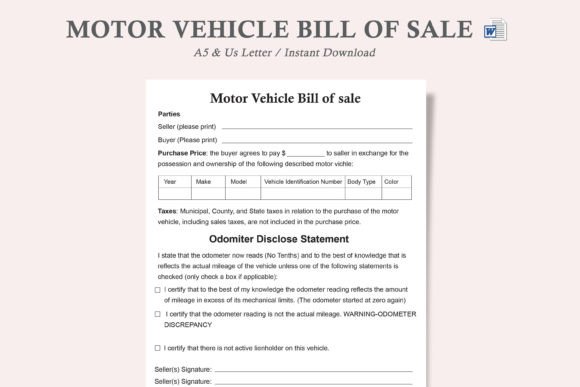
A Motor Vehicle Bill of Sale is a written document that records the transfer of ownership of a vehicle from a seller to a buyer. At its most basic level, it includes identifying information about the vehicle (make, model, year, VIN), the sale date, the purchase price, and the names and signatures of both parties. It is distinct from the vehicle title, which is the official document of ownership issued by a state DMV. The bill of sale serves as supplementary proof of the transaction and is often required when you apply for a new title and registration.
What makes a Motor Vehicle Bill of Sale distinct from other transaction documents is its focus on the sale event itself rather than on broader contractual terms. It is typically a simpler, shorter document than a full vehicle purchase agreement or a retail installment sales contract. For private-party sales between individuals, a bill of sale is usually the primary documentation. For transactions involving dealerships, financing, or trade-ins, you will often encounter more complex documents that incorporate the bill of sale as one component within a larger contract.
Comparing Motor Vehicle Bill of Sale with Other Vehicle Transaction Documents
It helps to understand how a bill of sale relates to other common vehicle documents you may encounter. The terms are sometimes used interchangeably, but each has a slightly different scope and purpose.
Bill of Sale vs. Vehicle Purchase Agreement
A Vehicle Purchase Agreement is typically a more detailed contract that may include terms about warranties, conditions of sale, inspection contingencies, and payment schedules. It is common when a buyer is financing the purchase or when the transaction involves a dealership. In contrast, a Motor Vehicle Bill of Sale is usually a straightforward record of the sale itself, with fewer clauses and conditions. If you are selling a used car to a friend or through an online marketplace, a bill of sale is often sufficient. If you are buying from a dealer with a warranty and financing, you will likely sign a purchase agreement that includes a bill of sale section within it.
Bill of Sale vs. Car Sales Contract
The term Car Sales Contract can refer to a variety of documents depending on the context. In a private-party sale, it may be essentially the same as a bill of sale. In a dealer transaction, a sales contract is a comprehensive legal document that governs the entire purchase, including financing, trade-in, and any additional products like extended warranties or service plans. A standalone Motor Vehicle Bill of Sale is usually simpler and does not include these extra elements. For a private seller, the simpler bill of sale is often the better choice because it is easier to understand and less likely to create unintended legal obligations.
Bill of Sale vs. Automobile Bill of Sale
These terms are essentially interchangeable. An Automobile Bill of Sale is just a specific type of Motor Vehicle Bill of Sale that applies to cars, trucks, and SUVs. Some states have specific requirements for what a bill of sale must include, such as an odometer disclosure statement or a damage disclosure. In those cases, you need a form that complies with state regulations. A generic template may not cover these requirements, which is why using a professionally designed form that can be adapted to your location can save you trouble later.
Strengths and Tradeoffs of Using a Standardized Car Sale Form
Using a standardized template for your Motor Vehicle Bill of Sale has clear advantages. It ensures you do not forget important details like the vehicle identification number, sale date, or signatures. It provides a professional appearance that can increase buyer confidence. And it creates a permanent record that both parties can refer back to if questions arise down the road.
However, standardized forms also have limitations. A basic template may not include all the fields required by your specific state’s DMV. For example, some states require a bill of sale to include an odometer reading statement, a declaration of the vehicle's condition, or a certification of the seller's ownership. If your template lacks these fields, you might have to supplement it with additional paperwork. Another tradeoff is that a simple bill of sale does not address issues like “as-is” sales, warranties, or dispute resolution. If you want to clearly state that the vehicle is sold without any warranty (which is common in private sales), you may need to add that language yourself or choose a template that includes it.
A well-designed template strikes a balance between completeness and simplicity. It includes the essential fields that most transactions require, while remaining flexible enough to be used across different states and scenarios. The professionally designed Motor Vehicle Bill of Sale Car Sale Form template, for example, offers a minimalist, ink-friendly layout that prints cleanly and is easy to fill out. It comes in multiple sizes (US Letter, A4, A5) and formats (PDF, JPEG, and editable Word files) so you can choose the version that best fits your workflow.
When a Motor Vehicle Bill of Sale Is the Right Choice
A standalone Motor Vehicle Bill of Sale is ideal for private-party transactions where the vehicle is sold for cash, or where payment is made through a secure method like a bank transfer or cashier's check. It is particularly appropriate when:
- You are a private seller selling a personal vehicle to a friend, family member, or stranger through an online listing.
- The buyer is paying in full without financing or a trade-in.
- The vehicle is sold “as-is” and you want a clear record that no warranty is provided.
- You need proof of sale for tax or registration purposes, or to release liability for the vehicle after the sale.
- The transaction is straightforward and does not involve multiple contingencies, inspections, or payment plans.
In these scenarios, a bill of sale is the most efficient and appropriate document. It provides legal protection without overwhelming either party with pages of fine print.
When You Might Need a More Comprehensive Vehicle Purchase Agreement
There are situations where a simple bill of sale is not enough, and a more detailed Vehicle Purchase Agreement or Car Sales Contract is necessary. You should consider a more comprehensive document if:
- The transaction involves financing. A lender will require a contract that spells out the terms of the loan, the interest rate, the payment schedule, and the consequences of default.
- A trade-in is part of the deal. The agreement needs to detail the value of the trade-in, how it is applied to the purchase, and the terms of transferring the trade-in’s title.
- Warranties or guarantees are offered. Any promise about the vehicle's condition should be written into the contract to avoid misunderstandings.
- The buyer or seller is a business or dealer. Commercial transactions often require more detailed documentation to satisfy regulatory and tax requirements.
- Either party wants to include contingencies. For example, the buyer may want the right to cancel the purchase if a mechanic's inspection reveals major problems.
If any of these factors apply, a basic Motor Vehicle Bill of Sale will not be sufficient. You will need a more detailed contract that incorporates the bill of sale as one component, but also includes additional terms and disclosures.
Key Decision Factors When Choosing a Vehicle Sale Document
When deciding which type of document to use, consider the following factors:
- State requirements. Check what your state’s DMV requires for title transfer and registration. Some states mandate a specific bill of sale form, while others accept a generic one as long as it contains certain fields.
- Transaction complexity. The more moving parts the transaction has (financing, trade-ins, warranties, inspections), the more detailed your document needs to be.
- Parties involved. Private individuals can typically use a simpler form than a dealer or business.
- Liability concerns. If you want to limit your liability after the sale (for example, if the buyer gets into an accident or fails to register the vehicle), a clear bill of sale with an “as-is” clause and a release of liability is essential.
- Recordkeeping. Both parties should keep a signed copy of the document. A digital copy is often acceptable, but a physical copy is still preferred by many DMVs.
By weighing these factors, you can choose a document that provides the right level of detail without being unnecessarily complicated.
Practical Example: Using a Motor Vehicle Bill of Sale in a Private Sale
Imagine you are selling your 2017 sedan through a classified ad. You find a buyer who agrees to your asking price of $12,000, paid via cashier's check. The transaction is simple: the buyer wants to take the car as-is, and you both want to get the paperwork done quickly. In this case, a Motor Vehicle Bill of Sale is exactly what you need. You fill in the vehicle details, the sale price, the date, and both of you sign. You also fill out the title and odometer disclosure separately if your state requires it. The bill of sale serves as your receipt and proof of transfer. The buyer uses it to register the car in their name. This scenario is clean, efficient, and well-served by a simple, well-designed form.
Now consider a different scenario: you are selling the same car, but the buyer wants to pay in installments over three months, and you both agree that the buyer can return the car if a mechanic finds a major issue within the first week. A basic bill of sale would not adequately capture these terms. You would need a Vehicle Purchase Agreement that outlines the payment schedule, the condition under which the buyer can return the car, and what happens if the buyer defaults. In this case, a simple form would be insufficient.
How the Right Template Simplifies the Process
Having access to a professionally designed Motor Vehicle Bill of Sale Car Sale Form template can make a real difference. It removes the guesswork from creating your own document from scratch and reduces the risk of omitting crucial information. The template designed for this purpose includes a clean, professional layout that prints well at home, at a local print shop, or at a shipping center. It is available in multiple sizes (US Letter, A4, A5) and formats (PDF, JPEG, and editable Word files), so you can use it whether you are filling it out by hand or typing on your computer.
This particular template is designed to be straightforward and ink-friendly, making it easy to print a new page each time you need one. It is a practical resource for private sellers, buyers, or even small dealerships that want a consistent, professional form for low-volume transactions. While it does not replace the need for compliance with your state’s specific requirements, it provides a solid foundation that you can supplement with additional disclosures as needed.
Making an Informed Decision for Your Vehicle Transaction
Choosing the right documentation for a vehicle sale or purchase is not about finding a one-size-fits-all solution. It is about matching the document to the complexity of the transaction and the needs of both parties. A Motor Vehicle Bill of Sale is the right choice for straightforward private sales where cash changes hands and the vehicle is sold as-is. When financing, trade-ins, warranties, or contingencies enter the picture, a more comprehensive Vehicle Purchase Agreement or Car Sales Contract becomes necessary.
The best approach is to understand what you need, what your state requires, and what level of protection both parties want. A well-structured bill of sale template gives you a reliable starting point that you can adapt to your transaction. By taking the time to choose the right document and fill it out completely, you create a clear record that protects your interests and makes the entire process smoother. Whether you are selling your first car or your fifth, knowing the difference between these documents puts you in control of the transaction.